 Skip to content
Many dropshippers believe that once a product starts trending on Google Trends, they’ve found their next winning product.
However, learning how to validate winning products before selling is what separates experienced sellers from beginners.
Google Trends tells you what people are searching for, but it doesn’t tell you whether customers are actually buying, whether suppliers can meet demand, or whether the product is worth selling.
Instead of relying on a single chart, experienced sellers validate every product before launching it.
This article introduces a simple three-step framework that combines Google Trends, Amazon, and supplier research to help you make smarter product decisions.
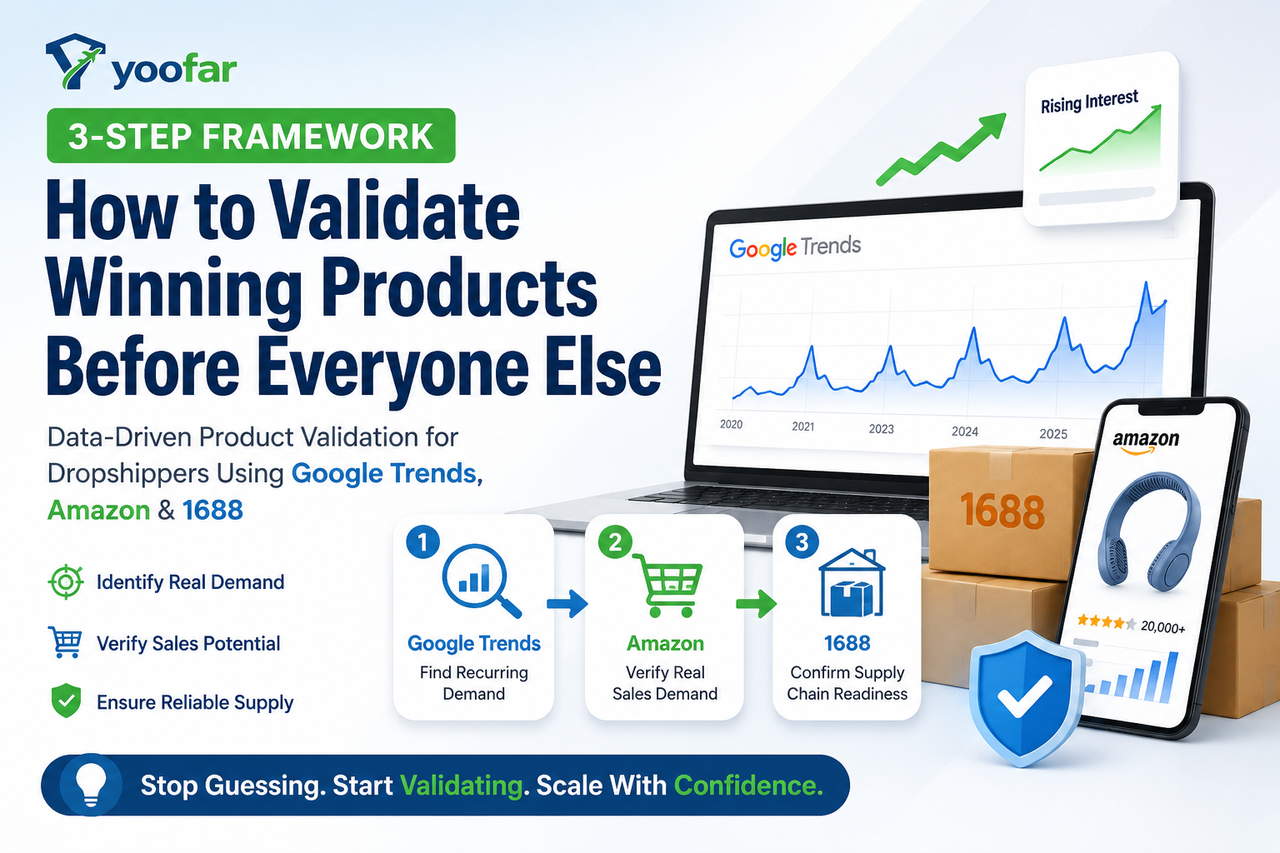
Step 1: Validate Winning Products by Looking for Recurring Demand
The first mistake many beginners make is checking only the past 90 days on Google Trends.
A better approach is switching the time range to Past 5 Years.
Products with recurring seasonal demand are usually much safer than products driven by temporary social media hype.
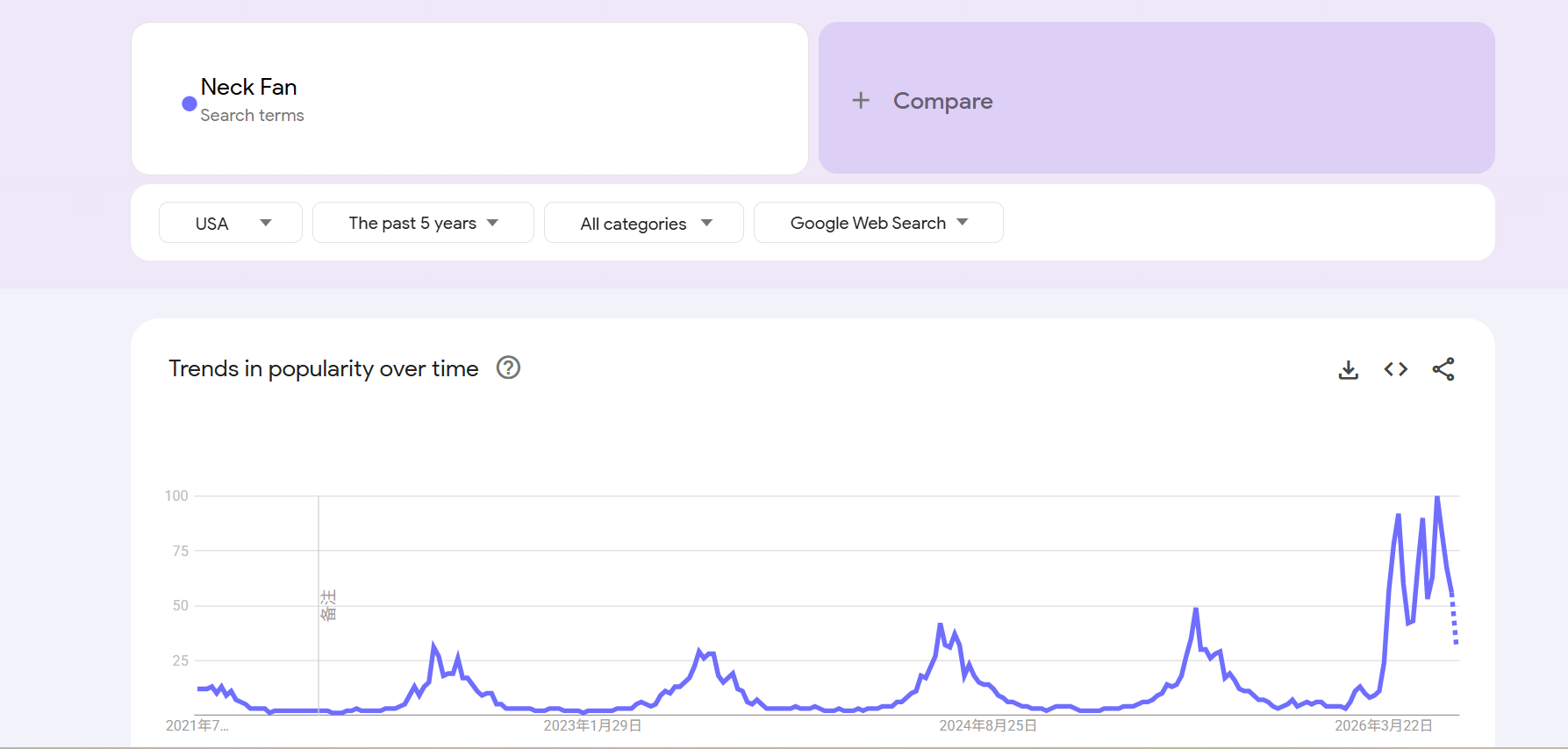
Neck Fan: A Seasonal Opportunity That Returns Every Year
Google Trends shows that searches for “neck fan” increase consistently between May and July every year.
In 2026, search interest climbed even higher than previous years, suggesting that wearable cooling products continue to gain popularity rather than fading away after one season.
Here’s a brutal industry truth: 90% sellers only check short-term trends and pick saturated handheld fans. 5-year data shows neck fans have steady yearly seasonal growth with less competition.
Critical pitfall: Never rely on 90-day trend snapshots for seasonal goods.
Pet Cooling Mat: Growing Demand Every Summer
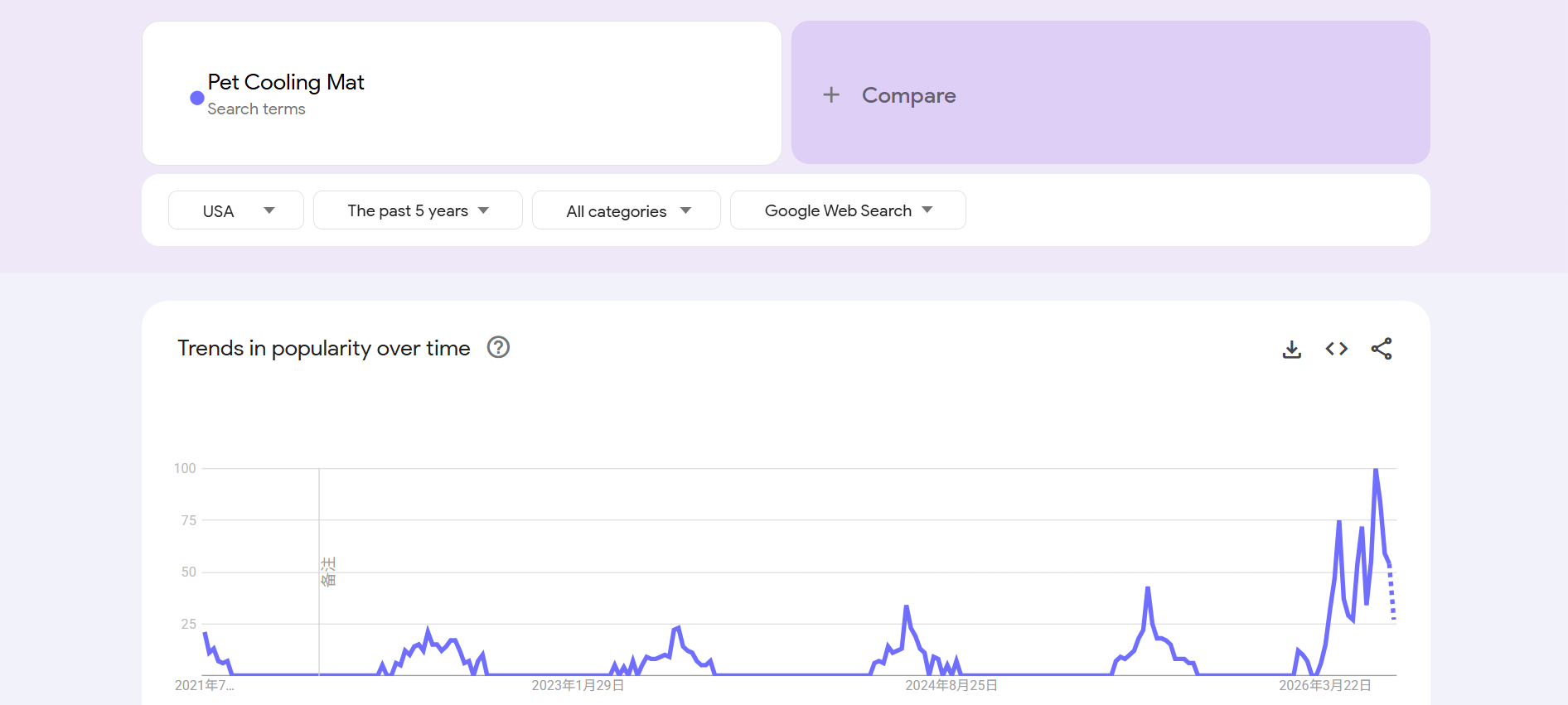
The same pattern appears for pet cooling mats. Search interest rises every summer, and this year’s demand is stronger than previous years.
Instead of a short-lived trend, it reflects a recurring seasonal need as more pet owners look for ways to keep their pets comfortable during hot weather.
Here’s a brutal industry truth: Most dropshippers ignore long-term trend comparison and flood the market with low-margin gel cooling mats. Pet buyers prioritize product safety over low prices, making fabric cooling mats a high-profit, low-competition subcategory.
Critical pitfall: Cheap gel mats leak under high temperature, triggering mass bad reviews, refunds and ad account limits.
Fidget Spinner: A Reminder That Viral Doesn’t Mean Sustainable
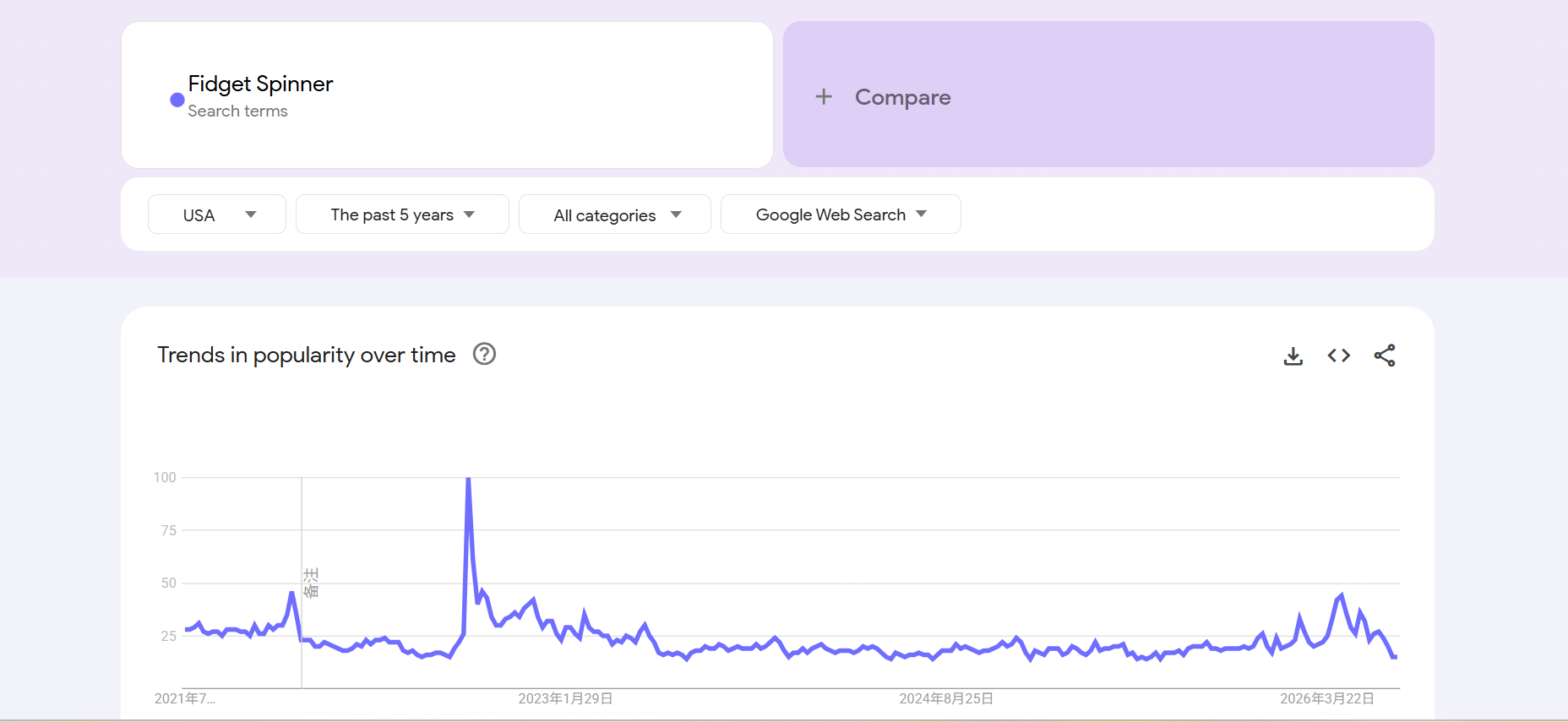
Not every popular product becomes a long-term business.
Compared with seasonal products, fidget spinner experienced a sharp spike in search interest before dropping significantly.
This type of product may generate short-term attention, but it’s much harder to build a sustainable business around it.
Here’s a brutal industry truth: Chasing one-time viral spikes is the biggest mistake new dropshippers make. Viral items lose traffic fast and leave you with unsold inventory.
Critical pitfall: Avoid products with a single sharp search spike and no annual repeat demand.
Key takeaway: Consistent seasonal demand is often more valuable than a one-time viral spike.
Step 2: Validate Winning Products with Amazon Sales Data
Search volume is only the beginning.
The next question is simple:Are customers actually buying?
Amazon is one of the easiest places to verify this.
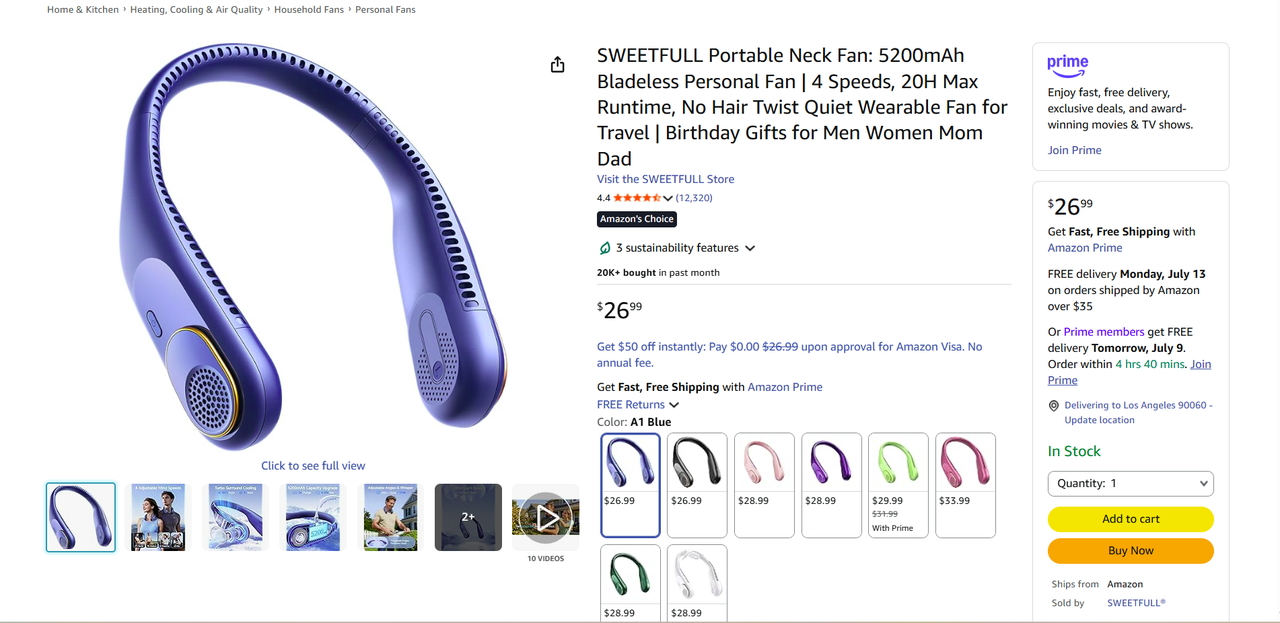
For example, one of the top-selling neck fans currently has:
⭐ 4.4 rating
12,320 customer ratings
20K+ bought in the past month
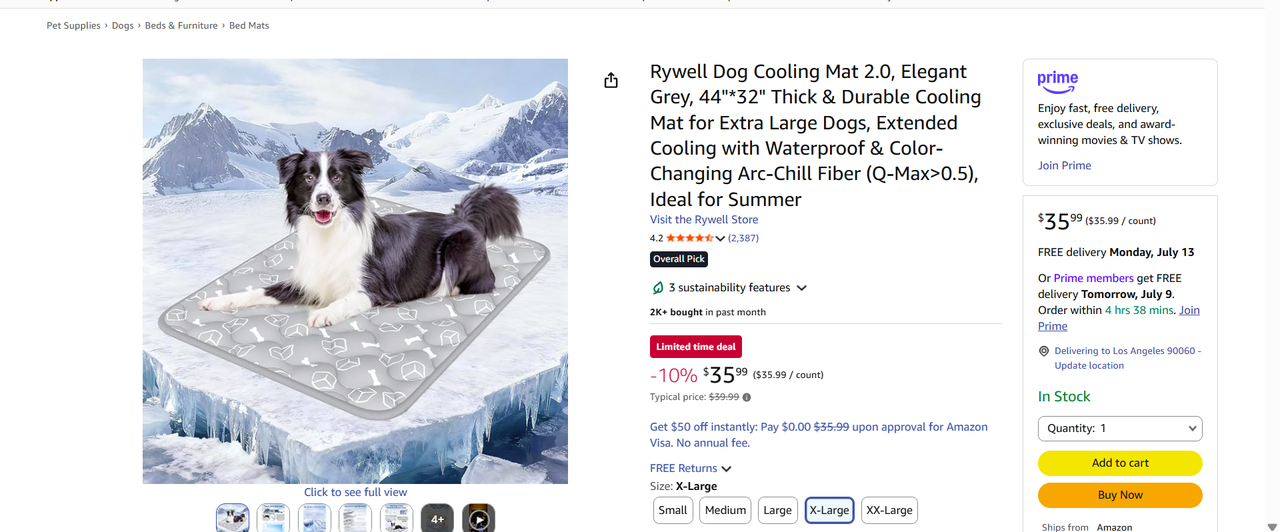
Meanwhile, a popular pet cooling mat maintains:
⭐ 4.2 rating
2,387 customer ratings
2K+ bought in the past month
Step 3: Validate Winning Products Through Supplier Research
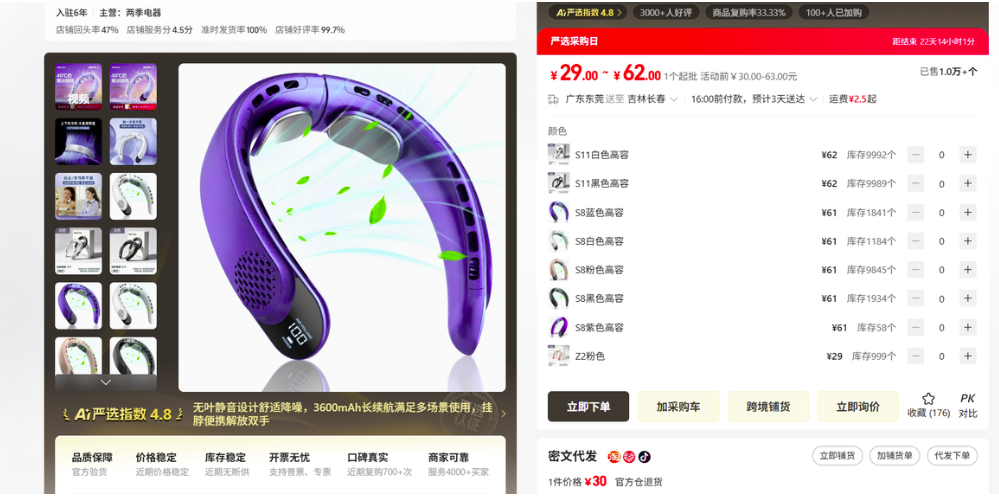
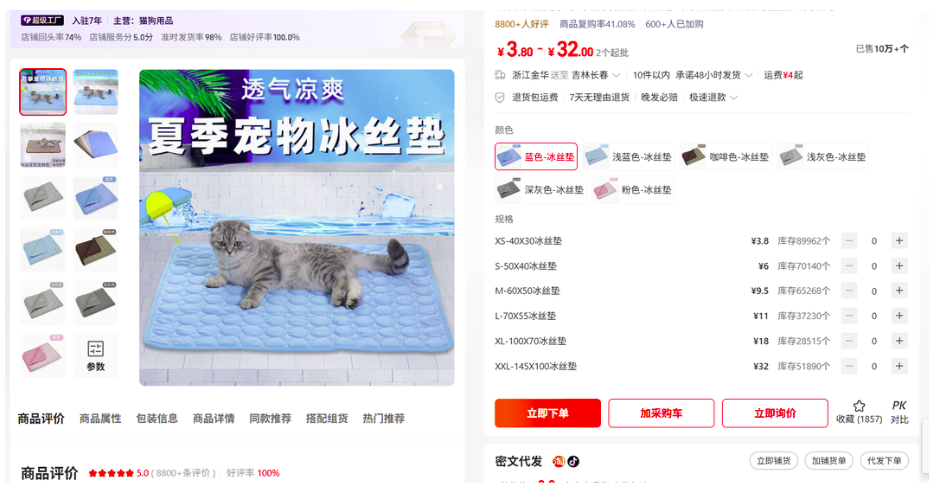
The same applies to pet cooling mats. Products are available from ¥3.8 to ¥32, with a minimum order quantity of just two units.
Some suppliers have already sold over 100,000 units and received more than 8,800 positive reviews, indicating strong manufacturing capacity and consistent product quality.
Finding demand is only half the job.
Making sure your suppliers can support that demand is what separates successful sellers from missed opportunities.
Product Validation Scorecard: Compare 3 Dropshipping Products Across 4 Core Factors
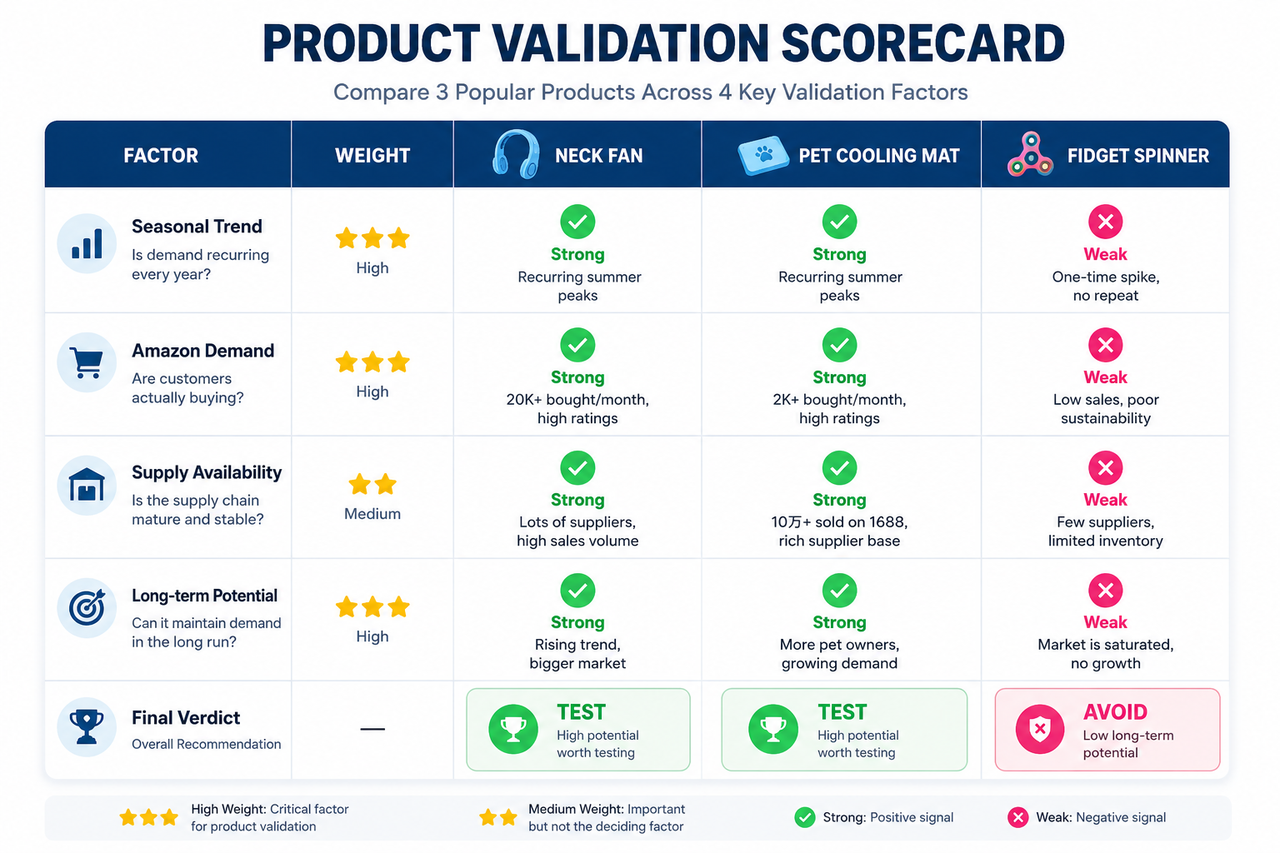
Conclusion
Google Trends is an excellent starting point—but it should never be your only decision-making tool.
The most successful dropshippers validate products from multiple angles: recurring demand, real customer purchases, and reliable supplier support.
Don’t guess. Validate first, then source.
At Yoofar,we help sellers move from product research to product sourcing by connecting them with trusted manufacturers, quality inspection services, private labeling, and global fulfillment solutions.
FAQ
- Is Google Trends enough for product research?
No. Google Trends measures search interest, but successful product research should also include sales performance and supplier verification.
- How far back should I check Google Trends?
Five years is recommended because it helps identify recurring seasonal demand rather than temporary spikes.
- Why should I check Amazon before selling?
Amazon shows whether search interest has translated into actual customer purchases, giving you stronger confidence before launching a product.
- Why is supplier research important?
Even if demand is strong, unreliable suppliers can lead to stock shortages, shipping delays, and poor customer experiences. Verifying your supply chain early helps reduce these risks.
- Can I trust Google Trends alone to pick profitable dropshipping items?
Absolutely not. Google Trends only reflects search curiosity, not actual orders, supplier stability or final profit margins. You must combine Amazon sales data and supplier research for full validation.