 Skip to content

Seasonal events expose the biggest flaw in dropshipping inventory management.
The 2026 FIFA World Cup has wrapped up, yet thousands of sellers hold piles of unsold fan jerseys and decorations.
Once tournaments end, demand for event merchandise vanishes overnight.
This crisis repeats with every seasonal trend: product demand fades far quicker than sellers can clear stock.Why the FIFA World Cup Is a Perfect Lesson in Dropshipping Inventory Management
Every major event creates a limited selling window.
During the FIFA World Cup, demand for team jerseys, flags, party decorations, and fan merchandise rises quickly. Many sellers rush to stock inventory, expecting demand to continue throughout the tournament.
But customer interest changes overnight.
Once a team is eliminated, demand for its merchandise drops dramatically. Products that were selling yesterday can become slow-moving inventory within days.
The problem isn’t football.
The problem is inventory timing.
For ecommerce sellers, one wrong purchasing decision can lead to months of warehouse fees, heavy discounting, and cash flow pressure.
The FIFA World Cup simply makes this problem easier to see.Three Types of Products That Become Dead Inventory Fast
The FIFA World Cup is only one example of how quickly demand can disappear. In reality, dead inventory affects many product categories—even those that don’t appear seasonal at first glance.
Understanding which products carry the highest inventory risk can help sellers make smarter purchasing decisions.
Date-Sensitive Products with High Dead Inventory Risk
Products tied to a specific year or date lose value automatically once that period ends.
Examples include:
Calendars
Academic planners
Yearly notebooks
A 2026 planner has little commercial value in 2027, regardless of its quality. Sellers who overstock these products often face heavy discounting or complete write-offs.
Trend-Driven Products That Quickly Become Dead Inventory
Some products don’t expire because of time—they expire because attention disappears.
Common examples include:
Limited-edition movie merchandise
Viral TikTok products
Internet meme T-shirts
These products can generate strong sales for a few weeks, but demand often disappears much faster than inventory can be sold.
Seasonal Products with the Highest Inventory Risk
Seasonal products return every year, but their selling window is limited.
Examples include:
Portable fans
Christmas decorations
Halloween costumes
Back-to-school supplies
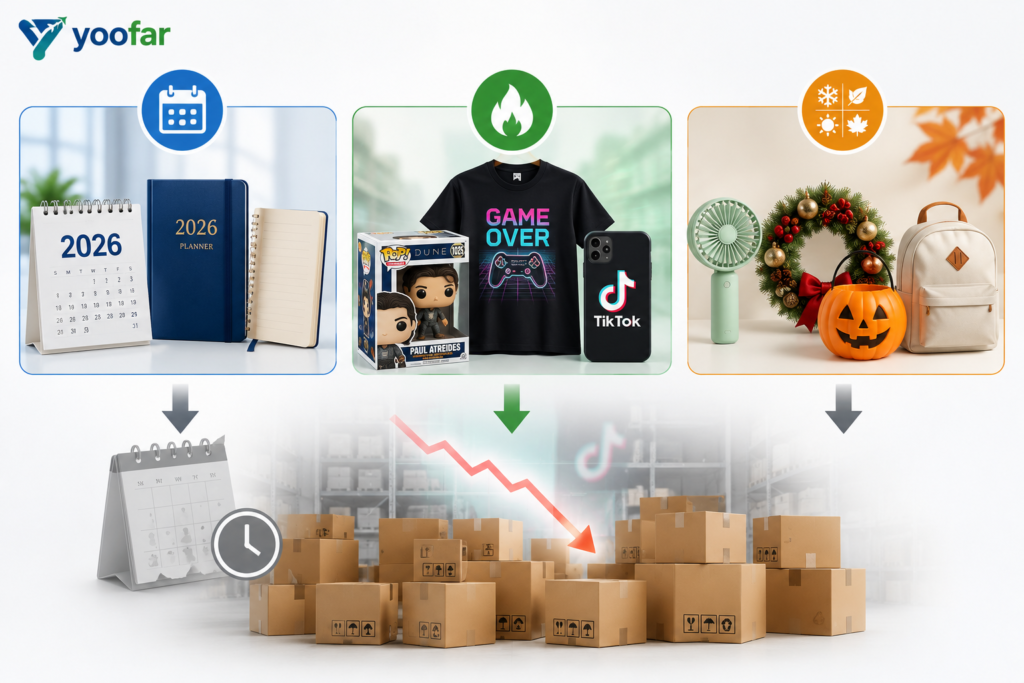
Key Takeaway: Inventory Risk Doesn’t End When Demand Ends
Whether a product is driven by a calendar, a social trend, or a selling season, the result is the same: inventory often outlasts demand.
The longer unsold products remain in storage, the more profit disappears.
That’s why flexible sourcing is often more important than simply choosing the right product.The Hidden Cost of Poor Dropshipping Inventory Management
Most sellers calculate only the purchase price.
In reality, the purchase cost is often the smallest part of the loss.
Poor dropshipping inventory management creates several hidden expenses that continue long after products stop selling.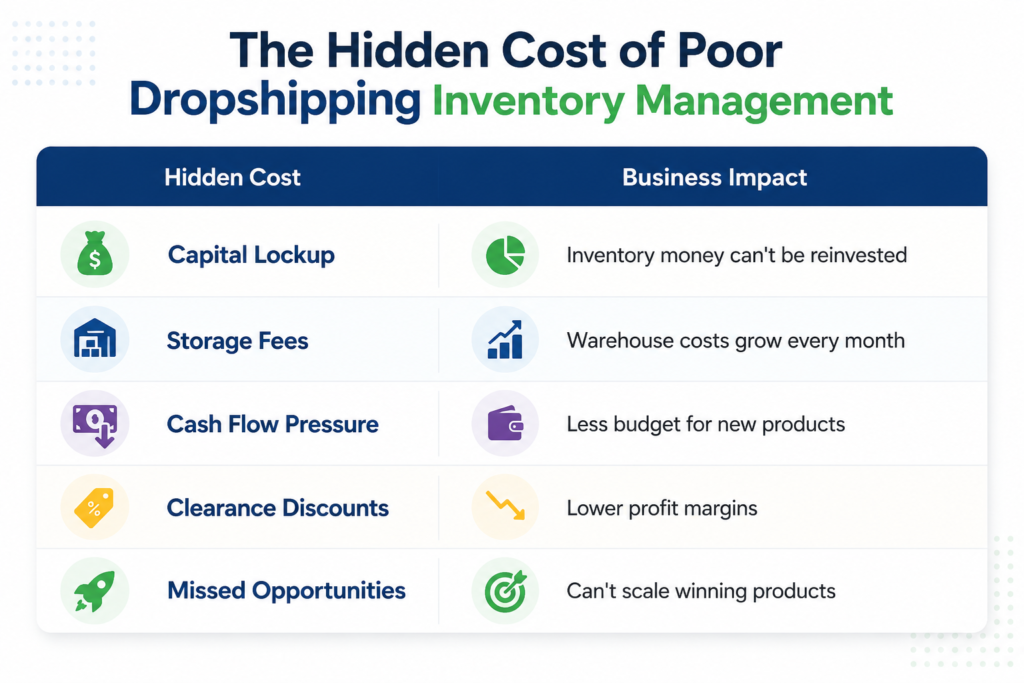
Every unsold product affects more than your warehouse.
It reduces your flexibility, slows business growth, and limits your ability to respond to the next market opportunity.How Successful Sellers Reduce Dropshipping Inventory Risk
The goal isn’t to predict every trend correctly—it’s to build a business that stays profitable even when trends change unexpectedly.
Successful sellers aren’t better at predicting trends.
They simply build a business that doesn’t rely on guessing.
Instead of purchasing hundreds of products before demand is proven, many modern dropshippers test products first, then scale only after consistent orders begin to arrive.
This approach significantly reduces dropshipping inventory risk, improves cash flow, and allows sellers to respond much faster to seasonal demand.
Rather than filling warehouses with inventory that may never sell, they focus on flexibility.
The goal isn’t to predict the future.
It’s to stay flexible when the market changes.
A Better Way to Manage Seasonal Products
Imagine two sellers preparing for the holiday season.
Seller A purchases 1,000 Christmas decorations months in advance.
Seller B lists the same products but sources and fulfills orders only after customers place them.
If demand exceeds expectations, both sellers make sales.
If demand falls short, only one seller is left paying storage fees and clearing unsold inventory at heavy discounts.
The difference isn’t product selection.
It’s dropshipping inventory management.The Right Fulfillment Strategy Can Prevent Dead Inventory
Inventory problems rarely begin in the warehouse.
They begin much earlier—when sellers purchase products before demand has been validated.
A flexible fulfillment model allows businesses to react to real customer demand instead of trying to predict it months in advance.
As we discussed in our previous article, Dropshipping Fulfillment: Why Fast Shipping Matters More Than Winning Products, the right fulfillment partner helps sellers stay competitive without carrying unnecessary inventory.
With a reliable fulfillment partner, you can:
Source products only when needed.
Reduce inventory holding costs.
Respond faster to seasonal demand.
- Scale successful products with greater confidence.
Stay Ahead of the Next Trend
Join thousands of ecommerce sellers sharing:
- Winning Products
- Seasonal Trends
- Google Trends Insights
- Supplier Recommendations
- Weekly Product Ideas
Final Thoughts
Seasonal Trends Come and Go. Inventory Decisions Last Much Longer.
The FIFA World Cup may only happen once every four years, but dropshipping inventory management is a challenge every ecommerce seller faces year-round.
Every seasonal trend creates opportunities—but it also creates inventory risk. The sellers who succeed aren’t always the ones chasing every trend. They’re the ones who know when to buy, when to wait, and how to build a flexible supply chain.
Instead of forecasting demand months in advance, successful sellers reduce risk by sourcing products only when orders arrive. This approach improves cash flow, minimizes warehouse costs, and keeps businesses ready for the next seasonal opportunity.
At Yoofar, we help ecommerce sellers source products, perform quality inspections, and fulfill orders efficiently—without unnecessary inventory pressure.
Ready to reduce inventory risk and build a more flexible supply chain?
Frequently Asked Questions
- What is dead inventory in dropshipping?
Dead inventory refers to products that remain unsold for a long period and are unlikely to be sold at their original price. These products continue generating storage costs while reducing available cash flow.
- How can dropshippers avoid dead inventory?
Many dropshippers reduce inventory risk by validating demand before purchasing products, working with flexible fulfillment partners, and avoiding large upfront inventory investments.
- Why do seasonal products create higher inventory risk?
Seasonal products usually have a limited selling window. If inventory isn’t sold before demand declines, sellers often face storage costs, clearance discounts, and lower profit margins.
- Is dropshipping a good strategy for seasonal products?
For many ecommerce businesses, dropshipping offers greater flexibility because products are sourced based on actual customer orders instead of forecasting demand months in advance.
- When should I start stocking seasonal products?
You should only consider bulk stocking seasonal products after real demand has been proven through pre-orders, ad testing, or consistent organic search interest. For most dropshippers, the safer approach is to list seasonal products early, monitor demand, and then scale with a fulfillment partner once sales data confirms interest.